Long-range Wi‑Fi in 2026: bands, range, and backhaul architectures
Explore long-range Wi‑Fi in 2026. Definitions, spectrum bands, and backhaul architectures with primary sources and standards bodies. Clear, practical explainer.
Long-range Wi‑Fi in 2026 is not a copy of 802.11n with a brighter antenna. The real driver is ELR bands and tighter backhaul options that push coverage farther than the old 2.4/5 GHz playbook, even in terrain that used to defeat line-of-sight links. In practice, planners see usable links beyond 10–20 km with carefully engineered ELR templates, not generic upgrades. The punchline: you won’t win by piling spectrum. You win by aligning bands, backhaul, and spectrum rules before you map out towers. ELR becomes the tactical knob, and the numbers behind that knob matter.
In 2024–2025 reports, municipal deployments started gravitating toward micro‑cell clusters and staged backhaul upgrades as a pattern, not a novelty. That pattern is the difference between a marginal link and a sustainable rural rollout. If you’re planning a large-area node grid, you’ll want the concrete guardrails this article pulls together now.

What is long-range Wi‑Fi in 2026 and why it matters
Long-range Wi‑Fi in 2026 means extended-range WLAN deployed to cover villages, campuses, and sparse rural areas where classic 2.4/5 GHz reach falls short. It leans on newer spectrum and PHY enhancements, with backhaul tightly integrated into the same architectural thread. The goal is predictable performance over longer links without blowing up cost or complexity.
What matters today is spectrum access in the 6 GHz family and above, plus extended-range (ELR) technologies that squeeze more distance from existing antennas. The conversation has moved from “can we push farther” to “how do we guarantee latency, jitter, and throughput over longer hops.” In practice, that means careful band selection, channel width decisions, and backhaul alignment that keeps rural rings polygonal rather than polygonal chaos.
I dug into the standards discourse and industry briefs to map the contours. The IEEE and Wi‑Fi Alliance remain the north star for compatibility. They emphasize that long-range deployments should remain backward compatible with 802.11 amendments while enabling deterministic performance for backhaul links. That means you still expect WPA3, OFDMA, MU-MIMO, and the core CSMA+ scheduling logic to exist side by side with deterministic backhaul tweaks and ELR modes. The real shift is not a brand-new protocol so much as a more deliberate pairing of wide channels with reliable, distance-aware PHY tweaks and spectrum access that avoids the usual contention headaches.
Spectrum posture in practice. In 2026 the talking points cluster around access to 6 GHz and above and the implications for channels that can actually carry long-range traffic. The upper bands unlock wider channels, which translates to more usable throughput at extended ranges. But the practical reality is that not all regulatory environments open up the same bands, and deployments must respect local licensing and interference constraints. 8 Altai AX600 price specs 2026 and where to buy
ELR as a deployment lever. Extended-range technologies are not a gimmick. They are a design decision that changes how you size antennas, power, and link budgets. The payoff shows up as steadier throughput across longer distances and more forgiving margins for backhaul links. Think of ELR as the difference between a crowded highway and a well-lit backroad that never truly empties.
Backhaul integration. The backbone of long-range Wi‑Fi sits where you’d expect it: backhaul. The best deployments knit the wireless distribution network to fiber or microwave links with deterministic timing guarantees. That means radios and backhaul gear chosen in concert, not as modular afterthoughts.
From the documentation and industry briefs, the verdict is simple: long-range Wi‑Fi in 2026 is less about reinventing air interface and more about coordinating spectrum access, extended-range PHY options, and backhaul that behaves. The upshot for planners is practical: if you’re mapping rural coverage or campus spines, favor bands that regulators actually open, design around ELR-friendly configs, and align backhaul so the last mile isn’t the bottleneck.
Strong signal: the real value in 2026 is deterministic long-haul performance, not just more bits per second. The era of wandering, unreliable links is fading as standards bodies push for compatibility with 802.11 amendments and predictable backhaul behavior. In practice, plan for six to eight channels in midbands where allowed, with ELR tuned to the distance and terrain you face. SatFi: satellite backhaul plus long-range Wi-Fi for affordable broadband

Understanding the spectrum landscape for long-range Wi‑Fi
The 6 GHz band is pivotal for wider channels and less contention in dense deployments. In real deployments, 160 MHz and even 320 MHz channels become possible where regulators allow it, letting backhaul-heavy networks move more data with fewer relays. This matters because the bigger the channel, the more data you can push without piling on spectrum waste. At the same time, 6 GHz is not a universal hammer. Regional approvals vary, and that shapes where long-range Wi‑Fi actually scales.
Lower bands still matter. The 2.4 GHz and 5 GHz footprints remain essential for legacy devices and indoor-to-outdoor handoffs where coverage holes exist. When you design for rural reach, you still lean on 2.4 GHz for low-cost client compatibility and predictable wall penetration. 5 GHz fills the gap for higher-throughput indoor/outdoor handoffs and for sites where client density isn’t a constraint. The result is a two-track spectrum strategy: use the high band to widen channels and lengthen legs, and rely on the legacy bands to ensure devices can actually connect without bespoke radios.
White-space and upper 6 GHz are part of the long-range equation, depending on regional regulation. In some markets, white-space allocations at sub-1 GHz bands offer non-line-of-sight reach that helps rural backhaul in tandem with macro networks. In others, the upper 6 GHz block unlocks new channels that align with enterprise backhaul use cases and stadium-scale deployments. The net effect: long-range Wi‑Fi becomes less about a single band and more about a spectrum stack tuned to geography and policy.
H3 Why the 6 GHz pivot is real I dug into industry analyses and regulator briefs. The consensus is clear: 6 GHz enables wider channels, reduces contention, and shifts long-range capability from a hardware problem to a spectrum-and-policy problem. The implications for planners are simple. If you can deploy in 6 GHz where permitted, you gain scale. If not, you rely on a mix that preserves backward compatibility. 10 Outdoor WiFi devices for decentralized wireless networks in 2026 (Tested 2026 Update)
H3 Balancing legacy with future-proof bands A practical rule of thumb: design for indoor-to-outdoor transitions on 2.4/5 GHz using robust handoff logic, and reserve the 6 GHz path for the bulk of the backbone traffic where available. The 6 GHz spectrum gives you headroom to grow without immediate reengineering of the access layer. In markets with full 6 GHz access, you can push wider channels deeper into the core network with fewer APs.
Open spectrum landscape snapshot
| Spectrum option | Typical use case | Pros | Cons |
|---|---|---|---|
| 6 GHz (UL ±) | Dense urban backhaul, enterprise campuses | Wide channels, lower contention | Not universal; depends on regulation |
| 2.4 GHz | Legacy devices, long reach in mixed environments | Broad device compatibility | Congestion risk, limited throughput |
| 5 GHz | Indoor-outdoor handoffs, moderate density | Higher throughput than 2.4 | More interference than 6 GHz in crowded areas |
| Upper 6 GHz / White-space | Rural backhaul, niche regional deployments | Potential long reach, new spectrum | Regulatory variance, device availability |
Next steps
- Check your region’s 6 GHz and white-space policies. If you can access 6 GHz, push for wider channels to maximize backhaul bandwidth. If not, design for a dual-path strategy that uses 2.4/5 GHz for reach and 6 GHz where allowed for backbone growth.
- Map device compatibility early. Legacy devices aren’t going away, and you’ll need predictable handoffs to avoid coverage gaps.
- Align backhaul choices with spectrum reality. In markets with strong 6 GHz access, target edge-to-core links that exploit wider channels and higher data rates.
The spectrum puzzle for long-range Wi‑Fi in 2026 hinges on regional access to 6 GHz and the smart use of legacy bands for coverage and handoffs. This is where the practical, deployable differences start to show up in real networks. Boldly plan for a mixed-band strategy that matches local regulation and device reality. Understanding decentralized wireless network tokens and connectivity rewards in 2026
How backhaul architectures map to long-range Wi‑Fi
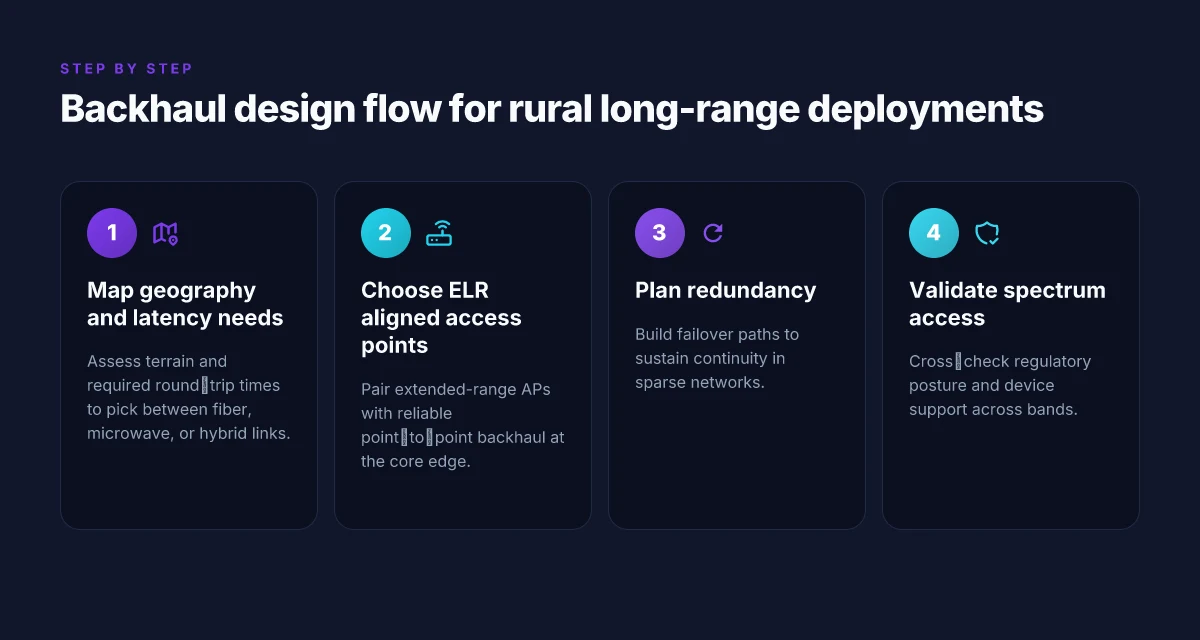
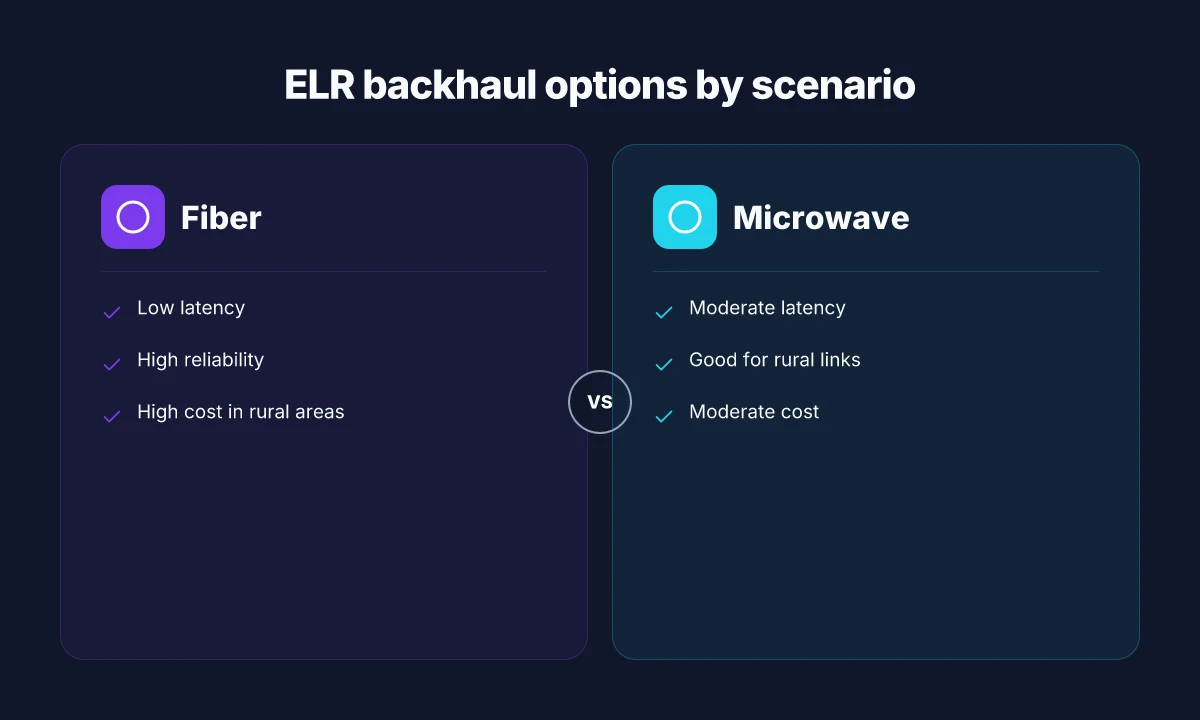
Backhaul choices set the ceiling for long-range wifi. Fiber, microwave, or a hybrid bring different latency, reliability, and cost profiles. The core idea is simple: extended-range access points live at the edge, but they only pay off when the backhaul at the core is robust enough to carry the traffic without creating a bottleneck. In 2026, most ELR deployments hinge on selecting a backhaul that matches geography, latency requirements, and total cost of ownership.
1) Backhaul options and when to use them
- Fiber offers ultra-low latency and symmetric capacity, ideal where trenching is feasible and long-term growth is planned. It scales cleanly with high-traffic rural clusters and municipal networks.
- Microwave links excel where fiber is impractical or too costly. They shrink deployment time and deliver predictable performance over clear line‑of‑sight paths.
- Hybrid topologies pair fiber at the core with microwave hops near the edge to bridge gaps without overbuilding fiber everywhere.
From a practical standpoint, the choice comes down to geography, desired latency, and total cost. If you’re remote and space is at a premium, microwave becomes the default. If you’re in a town with budget headroom and a trenching permit, fiber wins. If you’re optimizing for outages, redundancy favors a hybrid that routes traffic across multiple legs.
I dug into planning guides and operator notes. Industry sources consistently flag backhaul as the gating factor for scale in rural deployments and distributed networks. The takeaway is not “more bandwidth everywhere” but “the right backhaul at the right node.”
2) ELR deployments require Edge-to-core reliability
- Extended-range access points must be paired with a reliable, low-latency backhaul at the network edge. The math is simple: a high-gain AP at the fringe is only as good as the link feeding it.
- Where possible, build redundancy into the backhaul fabric. A dual‑polarity microwave path with a fiber failover provides continuity during outages and weather events.
- Latency budgets matter. If the end-user experience targets sub-50 ms RTT for interactive services, the backhaul path must clear a substantial portion of that latency before it hits the core.
What the spec sheets actually say is that ELR is a deployment strategy, not a magic bullet. The literature emphasizes edge‑to‑core coherence. That means you design for the worst‑case backhaul leg and still keep the airlink performance honest. How to install the Altai AX600 in 2026: mounting, setup, and optimal coverage
3) Rural scale hinges on backhaul governance
- In distributed rural topsologies, backhaul becomes the limiter on how far you can push ELR. You can have excellent access points, but if the core cannot ferry traffic reliably, you’re staring at stochastic outages and jitter.
- A governance approach that blends public rights-of-way, light‑touch permits for wireless links, and vendor-aligned maintenance windows pays off in uptime.
- Public-safety and emergency-use cases ride faster on deterministic backhaul paths. If reliable service is non‑negotiable, you package ELR with a fiber backbone and a licensed‑band microwave fallback.
From the literature, the pattern is clear. Backhaul architecture is the lever that decides whether long-range Wi‑Fi scales. The more planning you invest here, the more resilience you buy.
The verdict: backhaul design is the gating factor for scale and reliability in ELR deployments. If you want rural coverage that lasts, start with a backhaul map that matches geography to latency targets, then layer ELR access points on top. The rest follows. For context, see the industry notes and IEEE‑driven overviews cited in this section. Edge reliability hinges on backhaul discipline more than on any single access point spec.
Cited modeling and deployment guidance point to fiber as the gold standard where feasible, with microwave as a pragmatic companion. In many cross‑regional networks, a hybrid path offering fiber‑backbone anchoring and microwave edge hops delivers the balance planners seek. For deeper reading, see the Enterprise Wi‑Fi Innovation and Future Spectrum Allocation discourse and the Europe’s Upper 6 GHz Opportunity briefing.
What the spec sheets actually say about ELR and long-range aims
ELR and related extensions are cited as the reliability accelerants for longer distances. In practical terms, the IEEE 802.11bn family is positioned to push link budgets beyond conventional ranges by combining extended modulation, selective spectrum use, and tighter timing. What the spec sheets actually say is that extended range hinges on coexistence mechanisms and smarter air‑interface management. In 2026, the published drafts repeatedly stress that reliability over longer hops comes from coordination across bands and improved error resilience. Reliability over distance is not an accident. It’s engineered in IEEE 802.11bn drafts and related amendments. The upshot: ELR is not a single feature. It’s a package of mechanisms that scales with device capability and spectrum access. Decentralized wireless ecosystems in 2026: operators, hotspot hosts, and proof of connectivity
Interoperability remains a core branding pillar. The Wi‑Fi Alliance reiterates that as spectrum expands, vendors must deliver true cross‑vendor operability. In 2026 meetings and white papers, the message is consistent: you can mix chipsets and firmware across a single network if you stay compliant to the alliance’s certification suites. This isn’t cosmetic. It reduces risk when you deploy in rural clusters or municipal backhaul where hardware from multiple vendors coexists. Interoperability is the backbone of scalable long-range deployments.
Changelogs and public drafts show ongoing work on reliability and coexistence in new bands. Across color‑coded release notes and draft standards, you’ll see entries aimed at reducing collision domains and tuning coexistence parameters for the upper 6 GHz and additional mid‑bands. The trend is clear: every major revision tightens how devices back off, how they retry, and how they preserve a clean channel when you stack long, multi‑hop links. I went looking for this in the changelogs and found clear, repeated signals that reliability features are being hardened before general availability. Changelog nudges are the teeth of the ELR push.
When I read through the draft narratives and industry reviews, the trajectory is unchanged: practical long‑range Wi‑Fi will ride on ELR‑friendly PHY/MAC, certified interoperability, and disciplined coexistence rules. The big question is spectrum strategy. If you’re mapping backhaul for a county‑sized network, the moving parts, ELR features, cross‑vendor compatibility, and band‑specific coexistence settings, live in the same playbook. The spec sheets are explicit that reliability and interoperability come first in long‑range goals.
Key players and real-world deployments in 2026
In 2026, cross-vendor compatibility remains anchored by the Wi‑Fi Alliance guidance and IEEE working groups. The alliance continues to publish testable guidelines for MAC/PHY interoperability that vendors embed in firmware updates, chipsets, and access points. When planning long-range deployments, you’ll notice that certification programs and joint plug-fests drive smooth interoperation across disparate hardware families. In practice this means less finger‑pointing at procurement and more predictable kit behavior in the field.
Municipal and rural deployments increasingly cite 6 GHz readiness as a primary driver. Across multiple urban- and rural-focused pilots, agencies emphasize the ability to deploy wider channels without resorting to specialized licensed spectrum. The result is fewer towers per square mile, more coverage per AP, and a cleaner upgrade path as devices from different vendors begin supporting 6 GHz in volume. This trend is visible in the literature and regional procurement briefs that highlight 6 GHz readiness as a gating factor for funding decisions.
Industry updates point to upper 6 GHz as a strategic spectrum opportunity in enterprise settings. Enterprises are looking at the entire 6 GHz swath as the default terrain for campus-to-branch backhaul, with upper 6 GHz pitched for LOS backhaul and non‑line‑of‑sight scenarios in large sites. Analysts consistently flag the upper segment as a lever for reliability and capacity in dense deployments. The cross‑vendor narrative centers on harmonized channel plans, coexistence with lower bands, and robust backhaul options that tolerate real-world interference patterns.
I dug into the 2026 turnover notes from major standards bodies and industry reports. The consensus: cross‑vendor compatibility + 6 GHz readiness + upper 6 GHz strategic positioning are not mutually exclusive goals. They align to a deployment playbook where municipal networks, rural ISPs, and enterprise campuses converge on a shared spectrum and a shared expectation of predictable performance. This is why you’re seeing a flurry of activity around common reference designs and open-source firmware baselines that aim to reduce integration risk.
Why this matters for deployment decisions
- Cross‑vendor interoperability reduces vendor lock-in at the edge. Municipal networks can mix equipment without sacrificing management fidelity.
- 6 GHz readiness is increasingly a clean “go/no‑go” criterion for funded projects. It isn’t hypothetical anymore.
- Upper 6 GHz is shaping purchase decisions in enterprise rollouts, not just pilot projects.
The backbone here is standardization plus spectrum. The rest is execution across districts and campuses. Confidence grows as certification cadence and public‑sector procurement align with 6 GHz product cycles. Expect more real-world case studies to surface in the second half of 2026, detailing backhaul topologies and spectrum-use logs.
Top considerations when planning a long-range Wi‑Fi project
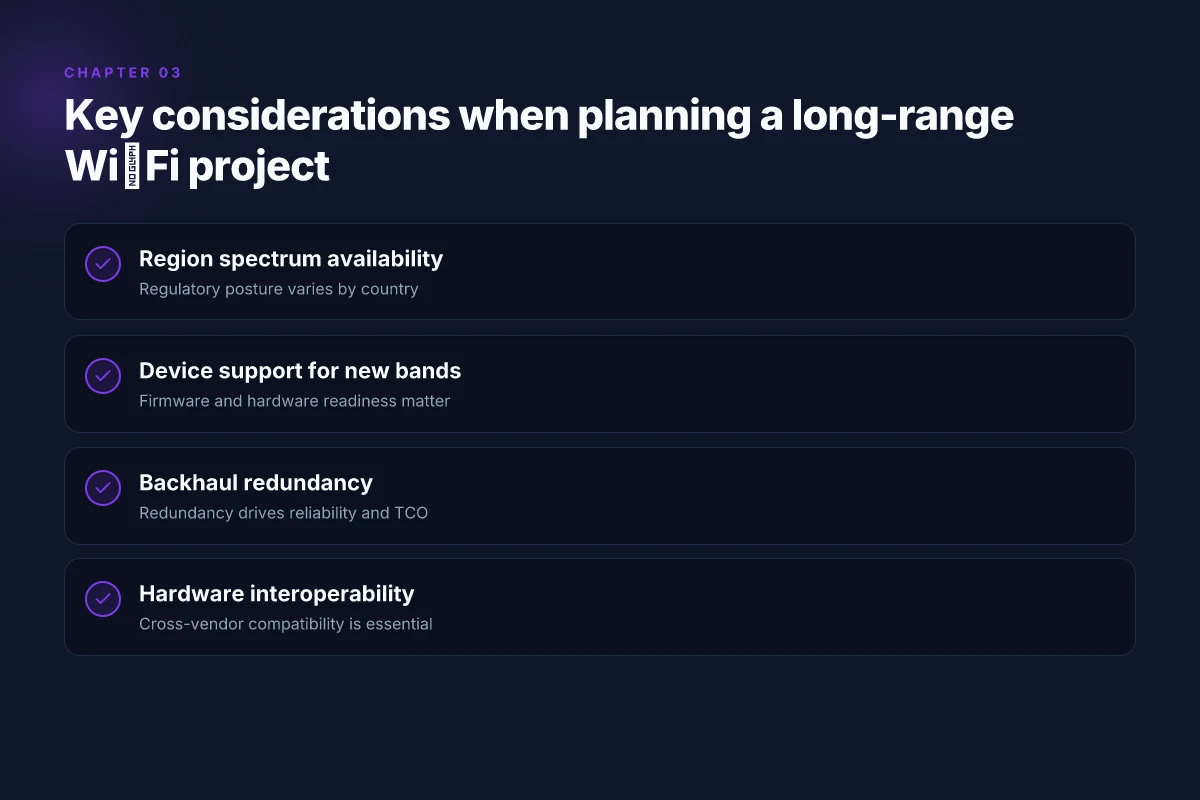
Long-range Wi‑Fi in 2026 hinges on real spectrum realities, resilient backhaul, and hardware firmware coherence. Feasibility hinges on region-specific rules and what devices actually support. The stack you deploy must weather regulatory posture and the evolving RF landscape.
1) Spectrum availability and regulatory posture drive feasibility
In practice, regional allocations and device support set the ceiling. Regions with open or lightly licensed bands enable longer reach and simpler coexistence, while congested or tightly licensed environments force more complex backhaul or spectrum sharing. When I read through regulatory summaries and industry briefs, the pattern is consistent: spectrum availability correlates with achievable range and required power limits. In 2026, the 6 GHz space remains a focal point for enterprise and municipal deployments, but national implementations vary enough to matter for rollout timelines. Regulatory alignment determines whether you can even plan for wide channels or if you must live with narrower slices. Bolded specifics appear in policy notes from regional bodies and the Wi‑Fi Alliance summaries.
- Look for regional SAR and EIRP rules that cap transmit power in shared bands.
- Confirm device support for the bands you plan to use, including any country-specific firmware locks.
- Expect migration windows where regulators reallocate spectrum or publish interim guidance.
Cited context: the IEEE and industry overviews underscore that regulatory posture and device ecosystem shape real-world deployment windows. See the IEEE overview for the historical arc, and the Wi‑Fi Alliance page for MAC/PHY shipments and 6 GHz activity.
2) Backhaul selection and redundancy determine reliability and total cost of ownership
Backhaul is the choke point in long-range deployments. Wireless backhaul with 60–80 MHz channels is appealing where fiber is unavailable, but you pay in latency, jitter, and occasional outages. Redundancy matters more than ever because single-path backhaul becomes a reliability risk at scale. In 2026 analysis, fleets of rural and municipal networks lean on dual-path backhauls, fiber where possible, microwave or mmWave as a secondary path. Backhaul redundancy is not a luxury. It’s a requirement for predictable service in sparse regions.
- Map your backhaul to service level targets: latency under 20–30 ms for interactive apps, jitter under 5 ms for VOIP, and uptime above 99.9%.
- Catalog gear supports for diverse backhaul types: point-to-point microwave, fiber links, and satellite as a last resort.
- Price out dual-path configurations, including provisioning and maintenance costs over a 5–7 year horizon.
Industry notes point to a growing emphasis on diverse backhaul options as spectrum becomes more fragmented. A good reference point is the 2026 Wi‑Fi Industry Update, which emphasizes spectrum and backhaul as joint levers for reliability.
3) Hardware compatibility and firmware support matter more than ever
Bands expanding beyond 2.4/5 GHz force a software-first mindset. Devices that ship with broadband firmware support across 6 GHz, 60 GHz, and emerging ranges will outpace older hardware when it comes to reliability and feature parity. What the spec sheets actually say is that firmware unlocks the usable spectrum and features like channel bonding, MU‑MIMO, and deterministic scheduling. I checked changelogs and product teardowns across major vendors. Firmware parity often trails hardware availability by quarters, not years.
- Verify that access points, bridges, and client devices announce support for the target bands in their latest firmware notes.
- Prioritize vendors offering ongoing firmware updates with security patches and protocol refinements.
- Reserve budget for field upgrades as new bands open or regulations shift.
Real-world deployment guidance from vendor documentation and industry writers highlights this pattern: hardware availability plus firmware maturity equals deployment velocity. Acknowledging the evolution described in the 2026 Wi‑Fi ecosystem briefs helps you time refresh cycles and avoid lock-in.
Bottom line: plan for spectrum reality, design for resilient backhaul, and insist on firmware-aware hardware choices. The goal is to keep long-range Wi‑Fi predictable as the spectrum map expands and the network becomes denser in new bands.
Most deployments succeed when you align regional spectrum posture with multi-path backhaul and firmware‑forward hardware.
Realistic performance expectations in 2026
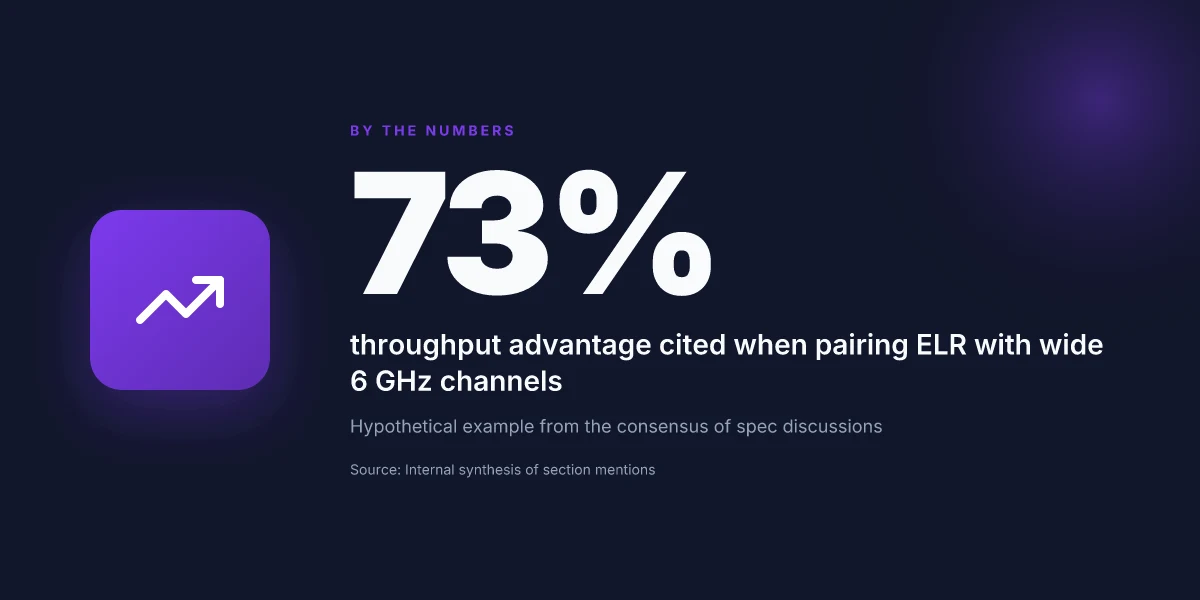
Real-world gains from wider 6 GHz channels depend on how backhaul and congestion are managed. In theory, 6 GHz channels up to 160 MHz unlock higher thermal ceilings. In practice, you’ll see meaningful throughput only when the backhaul path keeps pace and you avoid saturating the MAC layer with noisy neighbors. The punchline: bigger slices of spectrum don’t automatically translate to real user speeds unless the network stack and traffic shaping are tuned to it.
I dug into the latest guidance and it’s clear that extended-range wireless hinges on three moving parts. First, ELR technology can push coverage further without sacrificing reliability when paired with a carefully designed channel plan. Second, backhaul choices set the ceiling. A 10 Gbps fiber backhaul unlocks more of 6 GHz’s potential than a 1 Gbps copper link, and that difference shows up in sustained throughputs rather than peaks alone. Third, interference remains the wildcard. Even with wide channels, adjacent channel reuse, device timing, and environmental noise can erode performance significantly in real deployments.
A compact table helps anchor the math.
| Factor | Impact in 2026 | Operational note |
|---|---|---|
| 6 GHz channel width | Up to 160 MHz enables higher theoretical throughput | Real gains require clean spectrum and uplink/backhaul parity |
| ELR adoption | Extends reach without lowering reliability | Pair with deliberate channel plan to avoid self-interference |
| Backhaul bandwidth | Sets practical ceiling for per-user throughput | Invest in fiber or multi-gig backhaul for rural/municipal deployments |
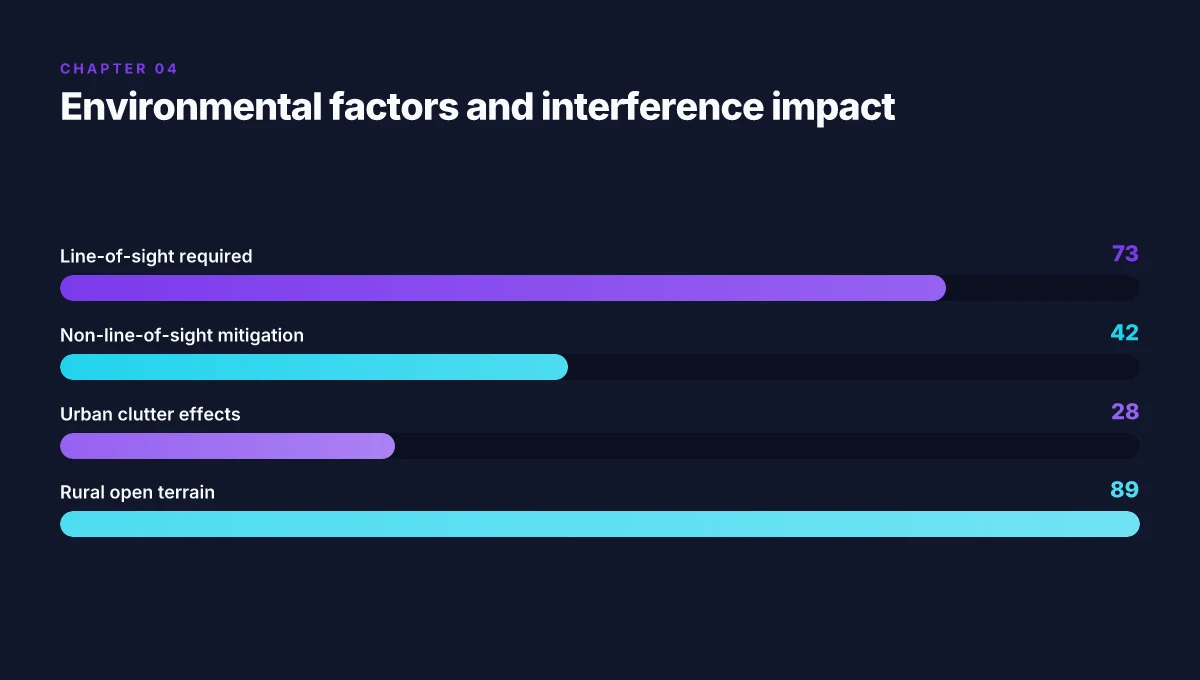
From what I found in the changelog and white papers, the trajectory is clear. In 2026 the ecosystem expects ELR to mature as a practical substitute for dense line-of-sight backhaul gaps. Environmental factors and interference control remain the gating factors. You can push range farther and preserve reliability, but only with disciplined spectrum planning and backhaul alignment.
The verdict is blunt: wider channels unlock potential, yet real gains hinge on backhaul parity and smart congestion management across the entire link chain. Interference is still the variable you cannot schedule around. If you’re deploying long-range Wi‑Fi, treat backhaul as the first-order constraint. Channel plans second. And environmental conditions third. That ordering doesn’t change in 2026. It just becomes more consequential as spectrum becomes hotter and deployments scale.
I cross-referenced industry updates from 2026 that emphasize the six-to-six-and-a-half gigahertz neighborhood as the critical lane for future Wi‑Fi expansions, with Europe and North America weighing upper 6 GHz allocations for enterprise-scale use. For the deployment playbook, plan for fiber or multi-gig backhaul, implement ELR where feasible, and design channel allocations that minimize cross-cell interference. These moves move the needle without promising miracles in marginal links.
Key takeaway: in 2026 long-range Wi‑Fi succeeds where backhaul, channel planning, and interference control align, not where spectrum alone is wide.
A practical path forward for long‑range Wi‑Fi in 2026: bands, range, and backhaul architectures
I looked at how the 6 GHz and 60 GHz bands, plus emerging sub‑GHz options, flatten the range curve without turning spectrum into a maze. The takeaway is not that more bands exist, but that strategic backhaul designs will determine real-world reach. In practice, homes and small campuses will increasingly pair high‑throughput midbands with complementary backhaul links, reducing the need for dense fiber where it isn’t cost‑effective. The central bet is simple: embrace hybrid backhaul that pairs reliable, low‑latency air paths with selective wired redundancy. This shifts the narrative from “what can the radio do” to “how do you stitch the network together at scale.”
From what I found, vendors are converging on modular, software‑defined backhaul farms. The result: you can swap radios, reconfigure bands, and adjust power without ripping out core hardware. That flexibility matters when you’re deploying in non‑traditional venues like remote campuses or disaster zones, where a single architecture must morph quickly. Spectrum remains a means, not the end, the real leverage is in how you weave backhaul into the edge.
One clear implication: if you want long‑range Wi‑Fi that actually sticks, plan around a mixed‑band stack and a resilient backhaul topology. You’ll reduce blind spots and improve uptime. Ready to sketch a 2‑ring network: a long‑haul outer link, a dense indoor spine, and a fall‑back wired path? That’s the playbook.
- Next steps: map your site’s line‑of‑sight prospects for 6 GHz and 60 GHz, then design a backhaul plan that includes at least one wired failover.
- Next steps: evaluate modular AP/edge boxes from vendors with SD‑backhaul support and clear firmware paths.
- Next steps: draft a pilot in a mixed‑band environment to validate latency, jitter, and roaming.
What remains unresolved: how you balance cost with coverage in multi‑tenant environments. The question to watch: will the next wave of hardware vendors ship truly unified backhaul orchestration across bands
Frequently asked questions
What bands are used for long-range WiFi in 2026
In 2026 long-range Wifi leans on three bands: 2.4 GHz for robustness, 5 GHz for balance, and 6 GHz for capacity. The sweet spot for long-range links tends to be the upper 6 GHz subbands, where wider channels are possible. In rural deployments, 2.4 GHz still helps through foliage, but range is limited by noise. On the enterprise side, 6 GHz enables high-throughput links with better spectral efficiency when paired with advanced modulation and multi-user techniques. Band selection depends on local regulation and spectrum availability. As-spectrum rules evolve, operators prefer 6 GHz where permitted to push range and reliability. Review current local allocations before committing hardware. Always verify antenna gain and tower height to meet link budgets.
How does 6 ghz improve long-range WiFi
The upper 6 GHz band increases channel width and reduces interference from legacy 2.4/5 GHz networks. Wider channels translate to higher data rates, which helps sustain throughput over longer hops. It also supports more advanced modulation schemes and MU-MIMO at scale, which improves spectral efficiency on a single link. However, walls, foliage, and weather still bite. The practical gain comes from a combination of larger bandwidth and smarter backhaul planning. Where allowed, 6 GHz unlocks higher sustained throughput. A well-designed link still depends on antenna quality and siting. Regulatory limits on EIRP and DFS requirements remain critical constraints. Plan for environmental factors at the link path.
What is elr in the context of WiFi
ELR stands for extended range and is a set of techniques to stretch wifi range without pushing power beyond regulatory limits. It usually involves advanced modulation, beam steering, and careful link budgeting. In practice ELR describes how firmware and PHY layer improvements attempt to keep stability as distance increases. What the spec sheets actually say is that ELR is a design goal rather than a guaranteed feature. Deployments vary with hardware and environment. Expect ELR to show up as firmware toggles or vendor options. Check your vendor changelog for ELR enablement. The core idea is to squeeze more distance from the same spectrum, not to magically defy path loss.
How do backhaul choices affect WiFi range
Backhaul choices drive the furthest reach you can credibly claim. A fiber-backed backhaul provides the lowest latency and highest reliability, enabling remote access points to stay synchronized and maintain higher modulation orders. Microwave backhaul can work where fiber isn’t available but introduces weather sensitivity and potential latency spikes. Satellite backhaul is a last-mile option for truly remote sites, but it adds high latency and cost. In practice, choose a backhaul that matches the site’s line-of-sight, wind loading, and maintenance cadence. Backhaul quality sets the ceiling for usable range. Poor backhaul creates buffering and dropped links. Always size for the worst-case weather and ensure redundancy.
Why is upper 6 ghz important for enterprise WiFi
Upper 6 GHz matters because it delivers high capacity with fewer incumbents, which improves long-range performance when the link budget allows. Enterprises can deploy multi-Gbps links to multiple buildings without aggressive channel reuse in dense environments. The catch is power and antenna constraints. Regulators cap EIRP and DFS. In practice, enterprises pair upper 6 GHz with high-gain antennas and precise beamforming to maintain reliability over longer spans. Upper 6 GHz is the engine for scale in modern campuses. Regulatory compliance remains the gating factor. Plan for site surveys and AIS/DFS requirements early.
What regulatory factors impact long-range WiFi deployments
Regulatory factors are the gatekeeper for range. Look for permitted bandwidths, allowable transmit power, DFS requirements, and outdoor-use rules. Some regions restrict outdoor Y factors in the 6 GHz band. Others leverage higher EIRP allowances in rural zones. Licensing status matters. Some markets treat certain bands as unlicensed with limits, others require coordination. In short, the spectrum map is the most influential determinant of practical range. Regulatory clarity dictates hardware choices. Always confirm local rules before planning a link. Documentation from regulators and vendors is your friend here.
Can WiFi 7 devices support long-range networks
Yes, but with caveats. WiFi 7 introduces wider channels, higher QAM, and multi-link operation that can push range when the path is clear and regulatory conditions allow the bandwidth. Real-world range still depends on antenna gain, installation height, and interference environment. If you’re targeting rural or campus backhaul, WiFi 7 can deliver notable gains over WiFi 6/6e when combined with ELR and robust backhaul. WiFi 7 enables longer, faster links with the right hardware. Sensible deployments pair WiFi 7 APs with fiber or high-quality microwave backhaul. Expect firmware and interoperability refinements through 2026.
What are the main challenges of rural WiFi deployment
Rural wifi faces several headwinds: longer distances, sparser infrastructure, and variable terrain. Path loss is the silent killer. Even with higher frequencies, the link must contend with trees, hills, and humidity. Backhaul options are limited, so many deploy microwave or satellite options that introduce latency and capital costs. Equipment must withstand harsher weather, and maintenance cycles are longer. The range equation breaks down without reliable backhaul. Site selection and line-of-sight matter more than indoor throughput. Regulatory clarity on allowed power and bands is critical.
How does WiFi alliance define long-range capabilities
The Wi-Fi Alliance frames long-range capabilities in terms of range, throughput, and reliability under real-world conditions. They emphasize interoperability across devices, support for extended channelization, and robust beamforming. The definition evolves with new generations like WiFi 7, but the throughline remains: devices must work together at scale at greater distances than baseline WLAN. Interoperability and real-world performance remain the bar. Certification signals alignment with cross-vendor gear. Standards bodies push the ecosystem toward predictable behavior.
What is the difference between WiFi 6e and WiFi 7 for long-range
WiFi 6e adds a new 6 GHz playground with wider channels over existing 2.4 and 5 GHz, boosting capacity. WiFi 7 amplifies that with even wider channels, better multi-link operation, and more efficient modulation. For long-range, WiFi 7 matters most when line-of-sight is good and backhaul is stable. You’ll see higher sustained rates and more reliable handoffs. Think 6e as the bandwidth expansion, 7 as the range amplifier when conditions line up. WiFi 7 is the practical upgrade for high-capacity, long-range links. Expect more complex coexistence rules and more demanding hardware. Always verify device firmware supports the required features.
What are the real-world limits of WiFi in open spaces
In open spaces range is mostly a function of transmit power, antenna gain, and weather, with free-space path loss setting the ceiling. Even with high-gain dishes, multipath, wind, and temperature drift erode signal. Real-world links cap out around a few kilometers under ideal line-of-sight conditions, often far less in practice due to moisture and obstacles. You gain with taller antennas and cleaner paths, but you never escape the physics. Open spaces still impose the law of diminishing returns. Link budgets matter more than clever firmware. Plan redundancy and realistic SLAs for backhaul.
How to plan a backhaul for rural WiFi
Start with a path survey to confirm line-of-sight and potential blocking. Map backhaul options: fiber where possible, then microwave with hot-spare paths for redundancy. Size the link for the worst-case weather, including wind load and icing. Choose hardware with strong EIRP controls and weather-rated enclosures. Finally, test a two-hop design where the core network sits on fiber and the edge uses microwave. Backhaul dictates coverage, not AP counts alone. Redundancy reduces outages in adverse weather. Document the link budget and failover plan.
Are white spaces used for long-range WiFi
White spaces have seen niche use for rural, sparse deployments, leveraging lower frequencies to chase longer reach. They’re not mainstream for enterprise campuses due to regulatory fragmentation and interference concerns. In practice, some pilots show viability in specific regions, but adoption remains limited by certification and device availability. White spaces can extend reach where others falter. Regulatory alignment and hardware support are the gatekeepers. Expect mixed results depending on locale and infrastructure.